The Deep End: The Swimmer in New York City
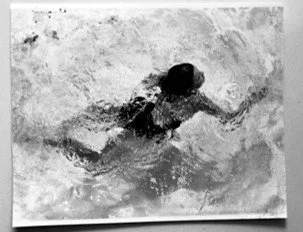
Rondi Davies took one last look at the yellow-lit Manhattan skyline before diving off a small boat into the green water. It was 6:38 a.m. on the 1st of September 2019 and the water was a comfortable 70°F.
In a bright pink cap, goggles, and a slick tight bathing suit, Rondi began her swim in front of the south point of Manhattan, by The Battery, where the Hudson and East River meet. The current pushed against her as she went north but she knew in about an hour it would turn in her favor when the tide came in. Rondi was now on her way around Manhattan.
Originally from Australia, but having spent most of her childhood in Papua New Guinea where her father worked, Rondi loved the outdoors. The ocean was at the center of everything she and her family did and she swam constantly. Rondi dreamt — like myself, and the millions of young, eager, and enthusiastic cosmopolitan seekers — of coming to New York City. But while I imagined myself zooting around Manhattan on trains, Rondi had her mind set on swimming around it.
Rondi’s goal to swim around Manhattan became more realistic when she was offered a post-doctorate position at the Museum of Natural History in New York as an Earth Scientist. Rondi found the transition from being able to swim outdoors all year round to training in indoor pools difficult, but she soon found a community in the form of NYC Swims, an organization that planned swimming events in and around the city.
Rondi had four and a half hours to make it up the Hudson to the Harlem River. She passed South Cove and reached North Cove at Brookfield Place in 40 minutes. She finally felt the current behind her at 8 a.m. The water was choppy; she swam over bouncy waves feeling happy — choppy water meant a faster current. If she had waited another month, the current would be stronger, but the water would have been too cold. She stuck close to the shore to avoid boat traffic, but eventually was able to move out into the river where she could feel the full strength of the current. She swam past Rockefeller Park, past The Whitney and Chelsea Market, past Hudson Yards. “It is the best way to see New York, seriously,” Rondi tells me months later.
Rondi was not the first person to brave the surrounding Manhattan waters. She follows a century-long line of swimmers who have plunged into Manhattan’s coolest lane. In 1916, Ida Elionsky was the first person (and woman) to do the counterclockwise route, swimming up the East River, through the Harlem, and down the Hudson. It took her eleven hours and thirty-five minutes. Her swim marked the beginning of a long line of swimmers who would attempt to circumnavigate Manhattan. Diana Nyad who completed the swim in 1975 told the author of Swim: Why We Love Water, Lynn Shur; “I breathed to the left, and swimming counterclockwise I saw New York all day.”
Rondi — first in a four swimmer relay team — competed in the 28.5 mile Manhattan Island Marathon Swim, she then did the swim in a two-person team, and finally, in 2011, swam the entire counterclockwise race where she set the women’s world record completing it in five hours, 44 minutes and 47 seconds. Since 1982, Manhattan Island Swimming Association, then NYC Swim hosted this official swim around the city. Rondi, along with her organization Open Water Swim, took over the Marathon Swim in 2016 when NYC Swim decided to step down.
Rondi then decided she wanted to do the swim in reverse — a much tougher challenge. On the 1st September 2019, Rondi attempted the less trailed, clockwise swim. People avoided the clockwise route because of the outgoing current you would have to swim against for most of the Harlem stretch. The Hudson is the longest part of the swim (12 miles) and so you want the current behind you for most of it. This means that for most of the nine-mile Harlem swim, you have to swim against the current. It is both tiring and dangerous — a swimmer needs to negotiate the faster currents under each of the 16 bridges in the stretch. Each of the bridges’ supports narrow the waterway creating a faster current under the bridge. A swimmer would need to locate whirlpools within the current to assist them under the bridges and through the strong current. This was a mental game as much as a physical one.
Rondi knew she had to reach the Harlem River before the tides turned against her. Even though she was 30 minutes late, Rondi reached a warm and calm Harlem River at 11 a.m. Her team on boats and kayaks rejoiced with Rondi as she began her swim with the current. With her, she had a boat crew person, an observer (to officially record the race) and two kayakers. Her team was there for her safety, to help her negotiate the currents, and to feed her Gatorade, bananas, Gu gels, mini choc-chip cookies, and ibuprofen every two to four hours. It only took 55 minutes for the current to turn against Rondi in the Harlem River as she reached the 207th Street Bridge. Rondi had been in the water for a total of five and half hours, and she knew the real work had finally begun.
At a mile and a half into her nine-mile Harlem stretch, Rondi thought to herself that she had not mentally prepared for the hard part of the swim to begin so quickly. She had calculated it all beforehand, and she was supposed to have the tide on her side for another few miles. She battled past Roberto Clemente Park, and then to High Bridge — a mile took an hour to swim. Rondi said, “The Washington, Alexander Hamilton, and High Bridge overpasses taunted me by looking so near and yet taking so long to reach.”
If you have been in New York City long enough, you start to understand that 20 blocks are equivalent to a mile. High Bridge is at 173rd Street and the Harlem stretch ends around 100th Street. 73 blocks are enough to justify a train ride but Rondi — with nothing else to think about as she pulled herself through the water — started to think if swimming it would be possible. Using her mile an hour rate, Rondi had to calculate if she would make her cut off time of 4 p.m. to get to the end of the Harlem River to make the outgoing ebb she needed for the East River.
Rondi was looking out for her new favorite landmark, the Hell Gate Bridge that would mark the end of her Harlem River stretch. She reached Hell Gate a few minutes before 4 p.m. Rondi had made it. Being Labor Day weekend, Rondi and her team had a moment to celebrate to the music blaring from Randall’s Island that was hosting Electric Zoo, an annual electronic music festival. With the high costs and large crowds of New York events, Rondi might just be right, that the best way to see New York City could be from low in the water surrounding it.
The Manhattan Marathon Swim is an event both Rondi and I had known about long before we ever came to New York City. Like me in South Africa, Rondi as a child was a big swimmer, traveling all around New Guinea to compete in open water swimming races. The swim around Manhattan was just something that was spoken about amongst swimming circles in our respective countries, but it seems not many people know about it in the city. Rondi and I laugh at how few native New Yorkers know that every year swimmers from all around the world compete in a marathon swim around the island.
Although breaking through the rippling, twisting, and sucking waves where the Harlem and East River meet was a challenge, Rondi felt euphoric knowing that finishing her marathon was now possible. She flew down the East River, swimming her last 7 miles in about an hour. The waves reached five feet high, but Rondi was having the time of her life; “it was wild, it was completely wild!” Rondi tells me with pure delight in her voice. As the sun slowly started to dip, Rondi speedily swam under the Williamsburg, Manhattan and Brooklyn Bridges. Then, she finally saw it, the silhouette of the burnt orange Staten Island Ferry. Her boat team had called ahead requesting that the ferry wait before crossing so she had time to pass through. And so after 11 hours and 17 seconds, Rondi reached the end of her swim at the Staten Island Terminal with a ferry full of onlookers to cheer her on.
Her record-breaking clockwise swim was part of what swimmers call ‘modelling’ the race for future events. Only three people including Rondi have completed it. Kris Rutford swam it in 1995 in 17 hours and 48 minutes while Elizabeth Fry in 2009 swam it in 11 hours, 44 minutes and 5 seconds.
***
New York City is surrounded — its boroughs divided — by water. The 321 mi2 of land is interrupted by streams, straits, creeks and more than 65 public pool facilities and hundreds of private pools.
For the story of New York City, we often turn to museums for its culture, to landmarks for its history and to the streets for the story of its people, but one could just as well turn to the water for the city's story, to understand that New Yorkeness of New York. Look to the first municipal pools that opened in the immigrant enclaves of the city in the early 1900s. To the working-class New Yorker who crowded the shippy shores of the polluted Hudson and Harlem Rivers. The pools of The Works Progress Administration (W.P.A.) Era — a brainchild of the depression — that opened throughout the summer of 1936, each accompanied by an opening parade and a public blessing of the water by a priest.
While the opening of public pools in the early 20th century marked an embracing by New Yorkers of public space, the late 20th century — with the move to the privatization of pools — symbolized the ‘good life’ and desire for domestic isolation. Today, there is a splash of both, and many more opportunities for people to take to the water.
And so the city— demarcated by its water — has created ‘The Swim Struck New Yorker.’
When I asked Rondi why she likes urban open water swimming, she had difficulty answering. She finally said, “this amazing waterway um … it’s just there.” Although the response seems unremarkable — past the fact that it resembles the words of famous mountaineer George Mallory when he was asked why he wanted to climb Mount Everest — it stuck to me because it isn’t the first time I have heard this response. This idea that it is just there to be used — along with the nostalgia for the hay days of swimming in the river — has captured the imagination of many New York swimmers.
In the late 1800s, the city had fifteen free-floating pools in the Hudson and East River. Each pool consisted of eight large pontoons placed together to create a 95 ft. long and 60 ft. wide enclosure to create a pool. A small gangway with dressing rooms framed the pools. In 1911, close to 2 million patrons used the floating baths scattered around the city. But by the 1920s environmental degradation of the rivers forced these pools to close one by one.
The end of the floating pools did not, however, mean the end for river swimming. In the early 1900s the shores of the rivers were littered with people. In a 1900 article, the New York Times described a common summer scene:
the juvenile New Yorker takes to the water. Along the waterfront of the lower part of the city, built up with wharves and warehouses and crowded with shipping, venturesome youngsters are seen swimming between piers, clambering upon vessels to dive from their sides … As one follows the river up town, and the water front becomes more open … the number of bathers increases until in Harlem the occasional vacant strips of rocky bank are so lined with them that one wonders whence they all come.
A general misconception is that the rivers surrounding New York City were cleaner then than they are today but in fact they are cleaner now than they have been in a century. In the early 1900s swimmers would wade amongst debris, rubbish and sewage and it wasn’t uncommon to swim into a dead body of someone who had drowned or been thrown into the river. Bill Bailey, in an oral history of Manhattan from the 1980s by Jeff Kisseloff said, “we swam among the condoms, the garbage, and the filth … as a matter of fact, the first intestines I ever seen came floatin’ down their once.” With the dangerous currents and having to avoid the large clusters of rubbish, the river was a treacherous place to swim and river drownings filled the papers every summer. Swimming in the river drastically decreased in the mid-1900s, and now we only hear stories of the odd eccentric person who made the recreational plunge.
***
Teddy Jefferson was not planning to jump into the Hudson River the first time he did it. It was a sticky July afternoon in 1993 and he was sitting at Chelsea Piers with his friend Diane Speccioso, at the end of a floating dock. It was low enough so that Teddy’s feet at the end of his dangling legs could caress the water. It had not rained for a while which meant the muddy sediment from upriver that gives the water its brownish color had cleared and allowed for a beautiful jewel green river. Teddy told Diane how inviting the water looked and before Diane could finish telling him, “but Teddy, it’s the Hudson”, he was taking his shirt off and lowering himself down into the water. While Diane thought it was madness Teddy said it was the most beautiful thing he had ever done.
Teddy just had to swim 100 ft., turn around and there was the whole city’s landscape as he tread the delicious water — salty and brimming at high tide. Teddy said he had always been drawn to water but swimming in the Hudson right next to the city was special. The first thing Teddy noticed when going underwater was this energy; not an emotional inwards kind of energy that people feel after a good plunge, but rather an actual physical vibration of the water. Teddy believes this buzz comes from all the machines running on the land, that gives the water a high level of energy, “you feel the nerves of the city, it is a pretty unique place to swim, I love it.” Teddy tells me.
Teddy was born in Paris, moved to Washington DC when he was three, but he and his two younger sisters spent the majority of their childhood living in Rome while their father worked for NATO. Teddy moved back to the United States when he was 20 to attend Yale to study art but ended up graduating with a major in comparative literature. While at Yale, Teddy did little swimming but spent a lot of time building sets for the theatre club where he learned a skill in carpentry. While at Yale, Teddy got to work with famous critic Harold Bloom on his Chelsea House Library, a seven-volume book series on Literary Critique for Twentieth-Century American Literature.
After Yale, like any person with a comparative literary degree and a knack for woodwork, Teddy moved to New York City in the late 1980s. Teddy says the city in those days was anarchy but everyone was an artist creating something, “everyone was working in these amazing decrepit, cavernous industrial spaces.” And so he joined the art scene, and wrote while making money as a carpenter.
After that first July swim, Teddy swam almost every day that summer and the next few summers after that. His favorite spot being off the Frying Pan — the 133 ft. long floating lighthouse anchored near West 23rd Street in Chelsea. Teddy said the Frying Pan attracted a cool community of waterfront people. He would swim there every day, diving off the barge, going for long swims and then hauling himself up one of the tires placed around the barge.
The Frying Pan was salvaged by John Krevey in the early 1980s from Chesapeake Bay, in Maryland after being underwater for three years. John Krevey was a waterfront activist committed to making the water around New York City more accessible to the public. He installed an engine in the boat and started his long voyage to bring the Frying Pan to the Hudson River in New York City in 1983. The Frying Pan has been moored in various spots along the Hudson, including Pier 25 in Tribeca; Chelsea Piers; and the Intrepid pier at W. 46th. Krevey was one of the earliest members of Friends of Hudson River Park, the civic group advocating for the 5-mile-long waterfront park. Along with the barnacle-encrusted lightship, Krevey had collected a decommissioned fireboat, called the John J Harvey Fireboat and a few other smaller boats that were all anchored to an old railroad barge at Pier 63 at West 23rd. Teddy became known as ‘The Swimmer’ to the Frying Pan locals.
Every Thursday night, Teddy used to go to Brother BQQ to listen to live music, it was here that he met his wife, Ladan Bassir. He said he saw, “this woman in the back with really black hair and sort of beautiful large almond eyes and a strong nose.” Ladan and Teddy got married and had two children, Parvaneh and Syavash. Teddy’s children loved swimming in the river as much as their father did, but Teddy couldn’t get Ladan into the water once.
Sadly for Teddy, swimming off the shore in the Hudson became illegal with the development of the Hudson River Park in the late 1990s. During the process of building the park, people like Teddy, and a group of lobbyists would attend planning events for the park and suggest ways the park could be used to make swimming in the river accessible to everyone. Teddy’s friend, Mark Heath started an organization called Swim The Apple to advocate for official swimming spots and beaches along the river. They presented designs for staircases and step-downs and argued the importance of river swimming, they argued that “the park is going to be mostly water, in fact New York City is a huge Archipelago and there should be swimming because there could be swimming,” Teddy said. In the end, the city decided to not include water access officially prohibited swimming for liability reasons. But the fight to bring swimming back to the river is not over.
In 2010 four designers asked themselves: What if we could change the relationship we had with the water that surrounds us in New York City? Nostalgic of the floating bathhouses of the early 1900s; Archie Lee Coates, Jeff Franklin, Dong-Ping Wong and Oana Stanescu thought up a design for a floating, self-filtrating pool.
Shaped as a 9500 square ft. plus sign and net bottomed, the pools would have the potential to clean 600 000 gallons of water every day while allowing people to safely swim in the river water around the city. The middle of the big + would serve as an Olympic sized lap pool while the sides would be adult and child wading pools. The pool has the potential to hold 300 swimmers with many more on the decks that surround it. Floating gangways that will rise and fall with the tides will allow access to the pool while still allowing the pool freedom to gently sway with the river’s waves.
In a similar sentiment to Rondi and Teddy, Kara Meyer — the director of the organization — said, “I have never actually lived this close to the water … like it’s right there… It’s right there but we can’t access it.” Meyer and I are sitting at Pier 17 facing the Brooklyn Bridge. The bridge extends over a brackish river, the water grasps every edge of the city past where I can see. Meyer believes that a driving force of her team and the designers to make +Pool a reality is the idea of reclaiming and democratizing the waterways that surround the city, “no one owns this water except all of us, so we want it back,” Kara exclaims. Right now, they are working with the city on a site for their first pool, but this is New York and waterfront property is a high stakes game.
Rondi Davies believes that the city caters to the incredibly wealthy who can pay high fees to dock their yachts in the harbor, so finding a spot to start their swim events has been a challenge. Her organization, New York Open Water, has had to cancel a number of their swims in the last couple years because of the rising costs of permits to get their boats in the rivers. Similarly, Kara tells me, “there is a lack of public pool facilities in New York for sure, that is impacting a lot of things, it’s contributing to the silent epidemic of the lack of swimming knowledge… we are making sure that everyone is excited about swimming in the river and feels like it’s their piece of it.”
***
Teddy remembers exactly when he last swam off the shore in the Hudson. It was the morning his wife had died. On May 27th 2016 — after a year and a half struggle with breast cancer — Ladan passed away. Teddy had an immediate craving to have some kind of communion with the larger universe and for him that meant being in the river.
Across cultures and countries, the submerging in water has often been connected to life, death, and rebirth — it is probably why swimmers so often describe swimming as a spiritual experience. We start life submerged in the womb and even before that, evolution tells us that life on this world emerged from water. The reemergence from water in Christian baptisms is a birth or rebirth into Christ and the church. A sip from the Ganges river in Hinduism is given to the dying, and bodies of the dead are placed in the river to ensure the dead will find paradise after death. In a Greek tomb found at the ruins of Paestum, a rock painting of a person diving off a large pillar into what looks like a body of water was discovered in 1968. Now known as ‘the tomb of the diver”, it reflects the symbolic journey from life to death or from one world to another, the water appears to be the end of that journey, and the diver must dive and die alone.
Teddy put on his bathing suit and asked his 16-year-old daughter Parvaneh if she wanted to go for a walk. They walked from 21st West to 26th street and then along the river to about just north of where the Frying Pan now sits. They eventually reached a pier with a slowly turning stainless steel water wheel right at the end of it. They walked down to a wooden sloping dock typically used by kayakers as it leads right into the water. They were hidden from street view. Teddy immediately took off his clothes and jumped into the river. He had not told Parvaneh he was planning to otherwise he knew she would have dissuaded him, but all she could say was, “oh, Baba, I knew you were going to do that.” Teddy said the swim was fantastic, it was cold, maybe about 55º F and bracing but — given what he had just been through — exactly what he needed. His swim was cut short when a kayaker started screaming at him, letting him know — in Teddy says a very kayaker type way— that he was not allowed to swim in the water. He knew this already, but at this moment it was worth breaking the rules.
***
New Yorkers may not be allowed to recreationally swim in the river, but in 2007 they were given a chance to swim on it. A 25 ft. long cargo barge was transformed into a floating manmade beach equipped with pool, volleyball net and even a small snack stand. The barge first docked in the East River by Brooklyn Bridge Park but each summer moves to areas that otherwise don’t have access to public pools. The Floating Pool Lady — as it is called— was the brainchild of urban planner and waterfront historian Ann Buttenwieser but is run and funded by New York City Parks.
New York City Parks operates 65 seasonal pools— 53 outdoor and 12 indoor pools. Last summer (2019) the pools citywide welcomed a total of 1, 706, 991 visitors and for the season hired 900 pool lifeguards.
As a child and well into my 20s, visiting public pools in my home city Johannesburg was one of my favorite Saturday activities. First it was about playtime in the water but it grew to be a love for the architecture and the history each pool complex told about the time it was built. Public pools always seem to be stuck in an era that is not our own, probably due to the great expense of constructing them, which favors maintaining over remaking. And so these pools become present-day hyperbolic architectural representations of its time. The Zoo Lake Pool down the road from me was built in the 1930s but feels like it came out of a classic 1980s American film. The turquoise pool set into burnt red brick ground is perfectly square. The pool is surrounded by an off-white building with Mediterranean-blue trimmings, and a brick grandstand, and there is a giant chessboard — a sentiment to the pools Art-Deco influence — on the grass to the one side of the pool.
Once I moved to New York City, I found out my aesthetics theory for public pools still stood some ground. Koscuizcko Pool in Bedford -Stuyvesant, that I first visited in the summer of 2019, takes you to the brutalist, blocky, and bricky architectural feeling of the 1970s. Being at the pool reminds you that you are very much in the concrete jungle, with nothing naturally green in sight. Gray concrete walls and floor surround the huge blue pool, and the complex is kitted out with umbrella-shaped concrete blocks that have been painted — as if someone had a last-minute idea to make them look like trees — green on the top. The pool was indeed designed in 1971 by Bed-Stuy native and designer Morris Lapidus.
At the Crotona Pool in the Bronx, there are still signs of animal-themed sculptures that reflect 1930s Art Deco. The pool is architect, Aymar Embury’s interpretation of a French castle. Tony Dapolito Recreation Center, formerly known as the Carmine Street Pool, in Greenwich Village was built in the 1930s but features a 1980s Keith Haring mural. The mural depicts various black outlines of fish and human-like figures swimming through yellow and blue patches of semi-translucent shapes. Haring was popular in the 1980s for his New York Pop Art street style.
The Highbridge Pool built in the W.P.A. Era is located next to the historical Highbridge Water Tower built between 1866 and 1872 as a pumping station and reservoir for Manhattan. The pool was built in 1936 but instead, you are brought into the era of the construction of the water tower that overlooks the pool. From the pool, swimmers can see — as the author of Waterfront, Philip Lopate describes — the “octongal, gracefully tapering structure with slender slit windows [that] looks almost like a medieval campanile.”
These snippets of design history in pools may be why so many contemporary architects are interested in pools. +POOL started as a design idea after all, and currently, New York City-based artist Harold Ancart’s exhibition titled Pools is now live on the David Zwirner Gallery’s website. Ancart has created small concrete versions of pools of all shapes, designs, and colors. Of his sculptures he says, “the pools point to a range of architectural, art historical, and everyday influencers … they draw equally from the formal structural language of Adalberto’s Libera’s Casa Malaparte, Tadao Ando’s Casa Wabi, the novel shaped pools found at holiday resorts, and the prefab ones in suburban homes.”
When the famous Dutch architect Rem Koolhaas — who was known for his fascination with public pools — was asked “What is it about public pools that appeals to you?” he responded, “They are some of the few spaces where Karl Marx’s utopia of a classless society has been realized. There are no class boundaries, every new visitor is integrated immediately. Visiting public pools is lived sociology.”
The first public swimming pools in New York City were not intended for swimming but rather as an initiative to bathe the “great unwashed.” After a century of one epidemic after the other ravaging New York, in 1885 lobbyists finally influenced a law that required cities in the state with a population of more than 50 000 people to build bathhouses to serve low income neighborhoods who otherwise had no way to bathe. By 1911, Manhattan had 12 pools, mostly located in immigrant neighborhoods. The bathhouses soon not only served as giant washrooms, but also spots to cool down in the hot summers. Of course, as can be expected, with poor filtration systems and no real chemicals to fight bacteria at the time, pools were not very hygienic. The water had to be changed three times a week, and still they became a cesspool for infection.
I think about this now, how the origin of the pools in the city was to combat epidemics, and how strange that feels in April 2020. In the midst of the Covid-19 pandemic, Mayor De Blasio announced that for the first time ever, the public pools will not open this summer. The only time the public pools in New York City came close to not opening for an entire season was back in 1991 because of budget cuts. These closures were ultimately avoided however because of a private donor who funded the running of a five-week pool season. The pools will not open this summer as a way to combat the curve of Covid-19 infections and save money that the city has lost from the virus. It seems we have come full circle.
In the 1930s and 1940s, with funding from the W.P.A., bathhouses were taken over by the parks department under the leadership of Robert Moses. He was also a big swimmer, allegedly not letting a day pass without going for a swim. Most of the existing bathhouses were reconstructed into modern indoor pools and another eleven giant outdoor pool complexes were built in the summer of 1936. Historically, the pools have been acknowledged as the start of public space projects in the city. The pools were not just recreational areas; their openings were a symbol or a message to New Yorkers, that in the midst of a depression, the government was here for them.
The 1960s brought the invention of the mini-pools to New York City for children under the age of 14. These pools were 20 by 40-inch aluminum containers, set in between four wooden decks. They were designed to be able to move easily as the needs of neighborhoods changed. By 1972, there were 72-running mini-pools in the summer. Today, only 19 of these pools still exist. The city also created ‘swimmobiles’ — imagine a container on a semi-truck filled with water, its roof cut off and people bobbing up and down and you get the picture. Swimmobiles were temporarily parked in neighborhoods that did not have access to a pool.
Along with the trend of transforming small lots into green oases, 19 more pools were constructed in the 1970s, these were the last pools built by NYC Parks and referred to today as the “vest-pocket pools’, a name adopted from the vest-pocket parks which were small parks being built everywhere in the city. The Kosciusko Pool in Bed-Stuy is amongst these pools.
***
Rem Koolhaas’s fascination with public pools reflects a lot of my own love for the public pool. Although I don’t completely agree with his utopian view, I do see how — in a hypothetical context in which everyone has had the opportunity to learn how to swim — the pool can be a true equalizer, an eraser of the individual. I thought about this when slipping into the Metropolitan Indoor Pool in Williamsburg this winter. I had not swum laps since moving to New York City, but as soon as I walked through the center’s grand pillared and arched entrance — reminiscent of the 1920s neo-classical look — it all came back to me.
The nostalgic scent of sweaty chlorine that hits you immediately, the rhythmic gurgling sound of fleshy hands hitting water while feet kick it up echo through the reception and change rooms, the weird absence of voices despite the crowd. I had come to swim at a pool in New York City but by the time I had settled in a medium-paced lane, I could have been anywhere in the world. I thought swimming — in many ways like the city I was living in — is universal.
Swimmers communicate in universal gestures: a look to the clock shows a person you are resting and that they can go before you, a nod acknowledges to the other swimmer that you know you are slower than them and that you will wait until they go ahead, and a little polite tickle of a toe alerts you to someone needing to overtake you mid-lap. These gestures mean that language and accent —which can be signifiers of place — are absent.
I loved the idea that through swimming I could travel to my childhood — when training in a pool used to make up my everyday routine. Once in a pool you are slow, medium or fast but very little else distinguishes you. I also know that New York City is far from Karl Marx’s utopia and that pools everywhere in the world have had a contested history. In the same way as they can be seen as a canvas of an era’s design influences, it can also paint a picture of a societies’ inequalities.
In the early twentieth century, New York City’s municipal pools were primarily segregated by gender and class. Jeff Wilste in his book Contested Waters: A Social History of Swimming Pools in America, says that even though it is surprising that pools were not segregated by race during this time, it was probably because in the late 19th and 20th century, cities were not building pools in neighborhoods that were predominately inhabited by black Americans. By the 1920s, however, this changed with the black migration north and the intensifying of residential segregation in cities. Municipal pools started to redraw their lines so that now both sexes and social classes could swim together, but different races could not.
While legislation started to prohibit the segregation of pools in the late 1940s and 1950s, pools were still a hot spot for violence against black swimmers. White swimmers against the desegregation of pools would use bats, knives, rocks, fists, and sometimes even dangerous cleaning acids as an attempt to clear black people out of pools. Wilste believes that historians have largely overlooked public space as a contested area of race, gender, and class relations while focusing more on housing, work discrimination, and schools. The municipal pool and its social reconstructions have marked — as Wilste puts it — “a fundamental shift in northern social values and patterns of social interaction.”
A history of racial segregation of pools in the United States has left generations of black youth and adults who cannot swim today. In 2016, the CDC found that an 11-year-old black child is 10 times more likely to drown than a white child of the same age — the lack of swimming ability being the main reason for drownings. The CDC however states that this disparity rate is actually probably larger because the rates are based on population rather than participation. The history of pools can highlight the ripple effect of segregation that— through generations — is still felt today. Organizations like +POOL — who have free adult and youth swimming programs across the city — are trying to make swimming safe for a larger proportion of New Yorkers so that the cities’ abundance of swimming water can be enjoyed by the whole city.
***
Bonnie Tsui in her newly published book Why We Swim writes that, “Swimming is, by our human definition, a constant state of not drowning.” In New York City, there doesn’t seem to be a better metaphor for day to day life, but for every swimmer — and New Yorker alike — even though the day to day is keeping afloat, there is much more to swimming than surviving.
“Absolute intensity and immediacy,” is how Dennis Thomas describes plunging into the winter Atlantic Ocean off Coney Island. Dennis, a tall lanky man with a gentle persona, is the president of the Coney Island Polar Bear Club. Founded in 1903 by health advocate Bernarr McFadden, the Coney Island Polar Bears are the oldest cold-water swimming club in the United States. McFadden, like many at the time, believed that swimming in cold water had a number of health benefits. In fact, the ‘water-cure’ has come in and out of vogue for centuries.
In 1853, Russell Thacher Trall founded an entire medical school dedicated to water therapy in New York City. The New York Hydropathic and Physiological School practiced what is known as hydropathy or the water-cure. The school taught the power of submerging in water — both hot and cold— to cure pain relief, nosebleeds, fever, infections, tuberculosis, salivary flow problems, and even neurological disorders. In the 1850s, hydropathy was a popular alternative medicine, and about 200 of these hospitals opened around the United States. Trall published a book in 1851 called The Hydropathic Encyclopaedia: A System of Hydropathy and Hygiene, an eight volume series dedicated to the water-cure. Swimming was highlighted as a critical part of the medical practice:
For the large class of invalids who are consumptive from feeble lungs and contracted chest, and for a still larger class of dyspeptics who are costive from torpid or contracted abdominal muscles, there is not better exercise than that of swimming. All persons, too, whether invalid or not, ought to know how to swim, on prudential considerations.
Today, swimming is still recognized by most health practitioners as an ideal way to stay fit because of its low impact and high reward ratio and cold water once again is becoming increasingly popular now amongst the alternative medicine communities. Rebecca Mead, in a recent New Yorker piece, “The Subversive Joy of Cold-Water Swimming”, highlights the recent trend of cold and wild water swimming, saying that more and more people are claiming that swimming in cold water can boost the immune system as well as improve general mental health.
Dennis tells me that although there is no scientific evidence to the health benefits of cold-water swimming, he has not had a winter cold since joining the club in the 70s. But his plunge into the ocean every Sunday in the winter months is less about the physical health benefits and more about what it does for his mind. Thomas says, “in New York, I think people carry a lot of stress, they worry about jobs and relationships and the subway is late, and all that but when you go into this water, you cannot think about those things, everything goes away because you are so absorbed in the intensity of this moment of just you being there in this very cold water.” Dennis tells me that a lot of the members hated winters in New York until they joined the Polar Bear Club; he says it was their way of dealing with the cold city, and now they can’t wait for winter. For Dennis and the other members, it is not about just surviving through the New York City winters anymore, but instead fully embracing them.
I joined the Polar Bears for one of their winter plunges on a sunny but cold morning in February this year. Steve, a large and jolly man in his 50s greeted me with a “this looks like a swimmer” as I approached the meeting spot on the promenade outside the New York Aquarium. Steve had the dad-bod look — large and round-bellied but tall enough to carry it comfortably. A white-board told me that the water was 40º F while next to the air temperature it said: too warm. ‘We prefer snow,’ a short round woman with gray hair and perfectly round glasses to match said as she read the same note next to me. She was already in her bathing suit and a white shower robe, I was in two sweaters, a pair of leggings, a pair of jeans, a beanie, two pairs of socks and a ski jacket, with my bathing suit underneath it all. I was nervous, but happy to be outside in the sun, with the salty ocean in front of me, while Roger Mill’s King of the Road blared out of a speaker from a bicycle that was parked on the promenade.
A happy crowd of about 50 people gathered by the Aquarium. Dennis had told me in an earlier interview that the club was a lot more diverse now than the old days. It used to be exclusively men but now women make up about 40 percent of the membership. I could still see the remnants of the old membership — men who looked like Steve with names to match — Tony, Willy, Mike — came up to me with stories of the old days. “We once had to shovel a path through the snow to get to the water to swim, there were only 12 of us back then,” Willy told me. Tony advised that I take off my spectacles before going into the water, as they once had a friend whose lenses popped right out when an unexpected wave hit them during a plunge.
There were as many women — young and old — on the boardwalk now as men but they were not as quick to give me unsolicited advice. Cindy— a swimmer who had decided to plunge wearing a silver glittered knee-high boots — did however tell me to start taking off my layers before heading down to the beach so my body could get used to the cold before we went into the water. Although many of the members had added some flair to their swimming outfits — a monkey mask, a gold crown, a judge’s robe — everyone swims in bathing suits, anything thicker like a wetsuit would defeat the purpose.
We finally stripped down to our bathing suits and made our descent to the beach. Although I had only met these people half an hour before, running down to the beach from the promenade — one big group of flesh — made me feel like I was part of their community. Maybe it was the fact that we all ran down to the beach together bellowing a ‘hoo-hoo’ warrior chant while a man blew into a conch shell. It could also be that as we did this, boardwalk civilians stopped to watch in amazement, them being the outsiders while I was part of the swimmers, the ‘in-crowd.’ Mostly, it was thrilling being part of a big group, in a city where I so often find myself acting as an individual.
Once on the beach, Dennis told me that it is customary to make a big circle to do some quick — likely useless — stretches and then repeat the Polar Bear Chant that can apparently change weekly: When I became a Polar Bear . . . I had a full head of hair or Shrinkage comes and shrinkage goes . . . Monday morning no one knows, and more recently: I hope everyone stays well . . . corona virus go to hell. Everyone knew it was my first time taking the icy dip, Mike came up to me to make sure I knew that while entering the water my body should be relaxed because if it was tense, I would feel the cold more intensely. Although skeptical I nodded while pretending to relax my already cold limbs. Steve said that it was important to keep my body directly facing the sun as I walked into the water. So imitating Steve, I walked — body slightly facing the right — into the water.
Every section of my body that touched water immediately went numb so that I couldn’t feel the cold. The top half of my body — as if it knew it would soon be in the cold water — soaked up the sun above us. A gentle-looking lady approached me flapping her arms above the water, she told me to keep my elbows and hands out the water, jump, and shout the warrior chant to stay warm — hoo, hoo, hoo, hoo, she demonstrated.
Once everyone was waist-deep in the wave-less water, the group took each other’s hands to make another circle. If you last up until the 10-minute mark, you form yet another circle. I — a little smug that I had made it this long my first go — joined them in holding hands. After the 10-minute mark, everyone around me started finding partners to hold hands with and dunk together. Before there was enough time for me to feel awkward about not having a partner, a woman with a gold crown resting on her jet-black hair took my hand and asked if I would like to dunk with her. We went under the water together and that is when I felt it — the numbness fade and the cold set in. I came up breathless, but with a strong desire to dunk again, which I did twice more. After the third time, my head was banging, and every part of my body was stinging and awake. The pain was like stretching a tight muscle, incredibly painful but at the same time such a relief, dunking in the water felt like a muscle stretch for my skin.
Everyone makes yet another circle at the 15-minute mark but at 14 minutes the cold overpowered my determination to stay in the water, and I had to get out. By then I was uncontrollably chattering and my skin felt slightly burnt. I probably would have risked staying in if the same lady who taught me how to jump up and down at first had not looked at my face and immediately said “you need to get out sweetie.” She clearly saw on my face what I felt in my body.
Once everyone was out the water, still in bathing suits, we gravitated to the Aquarium wall filled with murals, “find a spot on the wall with dark paint” Steve told me, “those are the warmest spots.” And so in a long line, our wet skin stuck to the walls as we all soaked up the little bit of heat before getting back into dry clothes.
Maneuvering my bathing suit off and my many layers back on under my towel felt like an impossible task. Cold to the bone, my body and even my thoughts moved at a glacial pace — I repeated in my mind what Dennis had told me previously, “no-one has ever died from a Polar Bear plunge.” Once I had finally finished getting my clothes on, Mike gave me a cup of tea from a big urn they had set up and told me I was welcome back anytime as his guest. I felt my body start to thaw. Everyone was slowly disappearing back to their individual lives and so I left feeling energized and content but also believing I may never be properly warm again.
Before this day, Dennis told me that each swim is the same, “they almost never vary, it’s you, it’s water, it’s cold.” The morning with the club felt in so many ways ritualistic. The swim — the belief and why everyone was gathered that morning — was framed with all these other traditions, the chanting, the circles, the wall. Like many belief systems, a community and practice has been built around this simple idea of The Swim.
It was not only with the Polar Bear Club that I felt this sense of ritual in regards to swimming. When I first met playwright Lee Kalcheim at his house to speak about why he swam every morning, I got the sense that it was ritualistic for him too.
***
At age 82, Lee swims at the YMCA on 14th Street every morning except for the occasional Sunday. His routine is the same every day. He wakes up early, has something small to eat — normally a piece of toast — and then walks to the Y. He gets to the pool at 8:45 a.m., in time for a good chat with his friends or as he likes to put it: a good shmooze and complain. He tries to be in the pool by 9:30 a.m. —the golden gap where enough swimmers leave the pool to get ready for work and swim lessons for children haven’t begun. Lee will swim freestyle for 20 minutes, about 20 lengths, and then get out the pool to stretch. He used to do this in the stretching room across from the pool, but he worked out that it was more time-efficient to do it in his bathing suit at the end of the pool — it means one less outfit change. The whole process takes him about an hour and a half.
Even though Lee has been swimming for almost 33 years now, he wasn’t always a swimmer. In fact, he did very little exercise before his heart attack in 1986. But even before this, he was never far from discipline and routine. As a writer, Lee would wake up at noon every day, walk the block to Washington Square Park for breakfast and then spend the rest of the day until 2 a.m. writing. He says writing is very much like swimming, “you have to be very disciplined.” Lee still writes about a play or two a year, but these days he is not as strict on himself with his daily writing rituals as he is on his swimming ones.
British writer Charles Sprawson says that swimming appeals “to the introverted and eccentric, individualists involved in a mental world of their own.” Thinking of Lee, Teddy, and to some extent myself as writers and swimmers, I realize how similar these two acts are. Both the writer and swimmer act in solitude and yet their solitary acts produce something very performative and expressive. It is probably why we have such beautiful books or scenes of swimming: of course Charles Sprawson’s Haunts of a Black Masseur, John Cheever’s The Swimmer, Enid Blyton’s Famous Five and Malory Towers, DH Lawrence’s Women in Love, Alan Hollinghurst’s The Line of Beauty, Esther Freud’s Love Falls, and even Bonnie Tsui’s non-fiction Why We Swim is so lyrically rich.
Lee sees both swimming and writing as acts we learn through imitation. Just as in the more you read the better writer you become, Lee believes, the more you watch swimmers — the more efficient your stroke can be. Funny enough, Tsui writes that humans are the only animals drawn to water that have to be taught how to swim; most animals that have a relationship with water are instinctively swimmers. Teddy sees both swimming and writing as practices of submersion, he sees each act as communion. F. Scot Fitzgerald once said, “All good writing is swimming underwater and holding your breath,” he also killed his most famous character in a pool. I love writing and I love swimming, but I think about this quote and how it describes the uncomfortable heaviness I sometimes experience when writing. It is only once I have surfaced from it, having written something good on the page, where I feel a release or relief, and sometimes even exuberance — it is the same feeling as hoisting yourself out the pool after a long lonely swim.
***
The swimming pool in the basement of the YMCA on 14th street is glistening. The small wobbles of water as people propel themselves through the pool reflect on to the clean blue and white tiles on the walls and floors.
I am waiting on a bench located at the shallow end of the 74 ft. pool staring at a mural at the other end. The mural depicts swimmers in the midst of some swimming activity, their beady eyes in goggles stare back at me. In a skin-tight black bathing suite, the tiniest complimentary towel covering barely the mid-section of my body, my cap and goggles in one hand and notepad in the other, I am feeling especially weird about meeting my subject in this semi un-clothed state.
Only fifteen minutes before, I had been sitting — five more layers on my body — with Lee Kalcheim and his Y friends on the other side of the wall-size glass behind me. While Lee actually does swim, it’s hard to say if the other men we left behind on the couches do, but my little recorder flashing red have them all telling me stories of sharks, scuba diving and lakes at summer camps. Phil interrupts the chorus of stories to tell me about his nude swimming days at the YMCA in the 1960s when it was still an all men’s club. But Phil was not just partaking in good old friendly skinny-dipping — the nude rule was mandatory.
In 1885, the first YMCA pool opened in Brooklyn. By the end of the year even though swimming was considered a distraction from real exercise 17 more YMCA pools were built across the country. While these spots provided an exciting new social arena, they were not considered the most hygienic. Poor filtration systems meant that the pools had to be emptied weekly. In an attempt to keep the pools clean during the week, it was mandatory to swim naked. Getting everyone into a small pool in the buff was considered more hygienic for two reasons, first, it meant that the wool from swimsuits would not get stuck in the filtration system but a more absurd reason was to make the genital inspection before swimming more streamline. Every pool had its own ‘qualified’ inspector who would check each swimmer for venereal diseases as well as any open wounds or other indications of an infectious disease.
The American Public Health Association mandated nude swimming for men in public and school pools around the country from 1926 until 1962, but even after this, YMCA’s were slow in removing this regulation. As Phil and the chorus of the men around me shared, swimming naked at the Y went on well into the 1960s.
While men were stripping to get into pools across New York City, the crowds that flocked to the beaches relied on the highest fashion of bathing suit. In 1883 Michael Murphy opened Ocean Bathing Suit Company in a small loft on 191 Fulton Street in Brooklyn. Along with bathing suits, Mr. Murphy manufactured petticoats and men’s shirts but he soon realized that he was making most of his profit from the cute flannel numbers people were taking to the beach. Quickly, Mr. Murphy discarded the other garments and became the first clothing manufacturer that solely focused on bathing suits.
Before the 1890s women’s bathing suits were commonly made of flannel. A book written by the Ocean Bathing Suit Company to mark their 40th Anniversary of making suits wrote, “designs were of the utmost simplicity but of sufficient length, breadth and thickness to afford a complete alibi for any attractive features the wearer might possess.” Illustrations from the time show women in lose shin length pants and tights, with a dress that was tied at the waist. If that getup did not drown you, the sleeves were also heavily covered in frills. By the 1890s, the frills were mostly replaced with the ‘leg of lamb’ style sleeve, a popular style amongst women’s garments. Men during this time wore a simpler suit, that closely resembled a short one-piece romper commonly made from hickory stripes.
By 1896, mohair and satin were used to make women bathing suits allowing for more streamline designs. For men, jersey replaced hickory stripes. By the 1910s, the one piece for men was replaced by a two piece, and by the 1920s women were wearing the simpler romper-like suit, but the fashion was still to have a skirted bottom, and the Ocean Bathing Suit Company became known for producing the skirted romper.
Jersey became so popular that The Ocean Bathing Suit Company decided to install their own knitting plant. With the invention of electrical transit that allowed more people to leave the city to visit beaches, bathing suits became more popular and The Ocean Bathing Suit Company had to move several times as it expanded. Eventually it settled on Sixth Avenue and 23rd Street in Manhattan to be closer to the garment district.
I now sit nine blocks and more a century away in a bathing suit that hardly resembles one of the past, waiting for Lee to show up in his black shorts and deep purple cap. It is 10:00 a.m., and time to join Lee — a little late, my fault not his —for his daily swim. It could be worse, we could all be nude.